Learn the Game
Download and print all game materials from the Instituto A Cidade Precisa de Você website.
Choose someone to serve as Master of Ceremonies who will facilitate the sessions. This person should watch the instructional video and read the manual thoroughly to understand the game mechanics and objectives. Familiarise yourself with the four-stage methodology: diagnosis and engagement, communication and education, activation and hands-on work, and sustainability planning.
Prepare all printed materials including game boards, cards, and instruction sheets. The facilitator should practice explaining the rules and be ready to guide participants through each phase of the collaborative planning process.
Gather Your Community
Identify and invite neighbours who are interested in transforming local public spaces. Focus on building a diverse group that represents different interests, ages, and perspectives within your community.
Reach out through local networks, social media, community boards, and word-of-mouth. Aim for participants who regularly use or care about the target space. Schedule an initial meeting where you can introduce the concept and confirm commitment.
Ensure you have enough participants to create meaningful dialogue but not so many that the game becomes unwieldy. Consider including local stakeholders like business owners, parents, or community leaders who might contribute valuable insights
3. Play the game!
Facilitate collaborative game sessions where participants work through the structured methodology to create their action plan.
Begin with recognising and diagnosing your chosen public space, encouraging players to share emotional memories and observations about the current environment.
Guide discussions about community engagement strategies and stakeholder involvement. Move through communication and education planning, then focus on designing hands-on interventions for short, medium, and long-term implementation.
Document insights, questions, and ideas throughout the process. The game naturally facilitates the process of selecting and determining necessary steps whilst ensuring all voices are heard and different community needs are considered
Implement Your Plan
Transform your game results into real action by assigning responsibilities and creating implementation timelines. Start with diagnostic and engagement activities, then progress through urban communication and education initiatives.
Move on to activation and hands-on interventions, followed by establishing sustainability and collaborative management structures.
Finalise your budget based on the action plan and seek donations for necessary materials. Invite additional community members to participate in the implementation phase.
Organise volunteer days, coordinate with local authorities if needed, and maintain momentum through regular check-ins.
Plan a grand opening celebration when your transformation project is completed to showcase community achievements.
Continue the Cycle
After completing your initial transformation, organise follow-up meetings to assess the impact and plan future improvements.
Play the game again to evaluate how your chosen space has changed and identify new opportunities for enhancement. Consider whether additional tools or interventions could further improve the public space. Document lessons learned and share your experience with other communities interested in similar projects.
Build on the relationships and skills developed during the process to tackle other neighbourhood challenges. Use your success story to inspire and support other community groups.
Maintain the collaborative spirit by establishing regular community meetings or forming a neighbourhood improvement group that can continue working on local projects.

 Per le comunità Idee per iniziare Ottieni finanziamenti, risorse e supporto per avviare progetti d'impatto
 Per gli innovatori sociali Sviluppa la tua idea Collegati con i promotori di cambiamenti della comunità e con la finanza per aumentare il tuo impatto
 Per le organizzazioni Avvia un finanziamento Finanzia i temi e le regioni che ti stanno a cuore

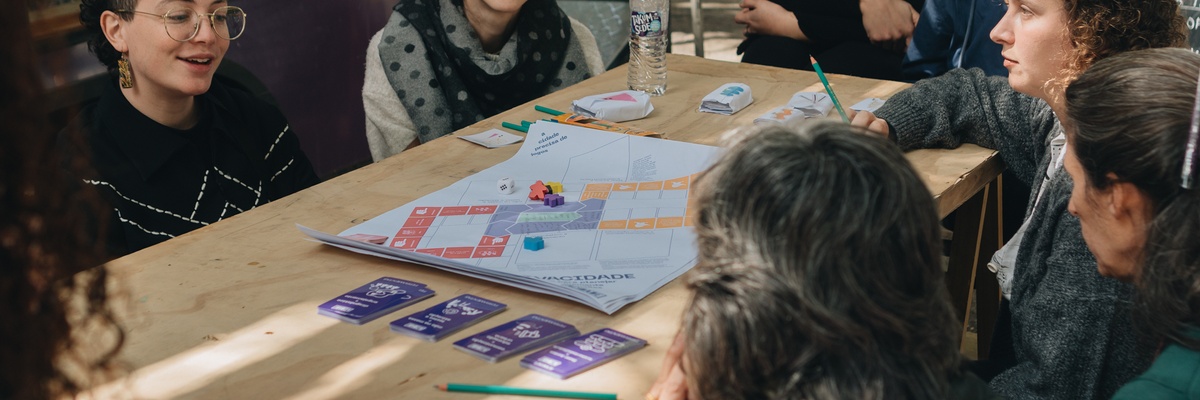






 "Welcome to the City Activation Game! We believe that everyone has the right to creatively build and intervene in their cities, and we created a board game for that. Gather your neighbors, and in a few hours, create an action plan to build a more democratic, collective, fair, and fun city! Through the game, you will learn about urbanism, community engagement, and various practical tools to transform your neighborhood into what you dream it to be! Let's play?"
- Karen Martini - Urbanist, Game Designer, and one of the creators of the City Activation Game
"Welcome to the City Activation Game! We believe that everyone has the right to creatively build and intervene in their cities, and we created a board game for that. Gather your neighbors, and in a few hours, create an action plan to build a more democratic, collective, fair, and fun city! Through the game, you will learn about urbanism, community engagement, and various practical tools to transform your neighborhood into what you dream it to be! Let's play?"
- Karen Martini - Urbanist, Game Designer, and one of the creators of the City Activation Game