Identify Suitable Site
In identifying a suitable space, here are some important factors you should consider:
- You need to ensure there are no pipes under the soil or overhead power lines, so it can be best to check with your local authority about the services in the area.
- Check to see if the site contains builder's rubble - use a fork or spade to dig down. A spade's depth is needed without any major rubble.
- The site should be able to easily accommodate 25 square metres (5m x 5m) of 75 densely planted native trees and shrubs.
- You'll need permission from the owner of the site to plant a forest.
Connect with Experts
Contact the Pocket Forests team through your project page to arrange an initial site consultation.
The team will look at your location to help measure and design your specific forest layout, taking into account local conditions and community needs.
They'll discuss design options for your Small Pocket Forest and provide guidance on the workshop schedule.
This professional assessment ensures your forest will thrive in its specific location and meets all technical requirements for successful establishment.
Prepare Soil Collaboratively
Organise your community to gather essential materials, compost, grass cuttings.
Schedule soil preparation workshops between September and November with at least 10 volunteers.
The Pocket Forests team will lead these sessions, teaching participants how to create optimal growing conditions.
This collaborative approach builds community ownership whilst preparing the foundation for your forest.
Plant Your Forest
Coordinate planting workshops during bareroot season (December-February) with at least 5 volunteers, though more participants create greater community engagement.
The Pocket Forests team will guide the planting of 75 native trees and shrubs representing at least 12 different species, using the dense Miyawake method.
Participants with no gardening experience can fully contribute to this collaborative process. The workshop creates immediate community connection whilst establishing the physical foundation of your biodiverse urban forest ecosystem.
Maintain and Monitor
Establish a team of dedicated Forest Keepers who will maintain the forest as it grows and develops over time.
Participate in the "How to Care for Your Forest" workshop led by the Pocket Forests team to learn proper maintenance techniques.
Create a schedule for regular watering, weeding, and monitoring during the forest's establishment phase.
Document growth progress and community engagement to share with the broader Pocket Forests network.
This ongoing stewardship ensures your investment in urban biodiversity continues benefiting the community for years to come.

 Untuk komuniti Mulakan idea Dapatkan pembiayaan, sumber dan sokongan untuk memulakan projek yang memberi impak
 Untuk inovator sosial Kembangkan idea anda Berhubung dengan pembuat perubahan dan kewangan komuniti untuk meningkatkan impak anda
 Bagi organisasi Mulakan dana Taja tema dan wilayah yang anda sayangi









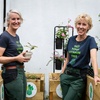 "Welcome to Pocket Forests. We want to help your school, business or community create a native pocket of biodiversity on your doorstep. Collaborate with friends, colleagues or neighbours to bring a forest to your part of the city. Find out more about how it works."
- Ashe Conrad-Jones and Catherine Cleary, co-founders of Pocket Forests
"Welcome to Pocket Forests. We want to help your school, business or community create a native pocket of biodiversity on your doorstep. Collaborate with friends, colleagues or neighbours to bring a forest to your part of the city. Find out more about how it works."
- Ashe Conrad-Jones and Catherine Cleary, co-founders of Pocket Forests